

Vibration level is a crucial factor when it comes to air sanders. As a reputable air sander supplier, we understand the significance of this aspect and its impact on both the performance of the tool and the well - being of the user. In this blog, we will delve into what the vibration level of an air sander is, why it matters, and how we ensure our products meet the highest standards.
Understanding Vibration in Air Sanders
Vibration in an air sander is the rapid back - and - forth or oscillatory movement that occurs during its operation. It is an inherent characteristic of the sander's working mechanism. When the air motor drives the sanding pad to rotate or orbit, various forces come into play, leading to vibrations. These vibrations can be classified into different types, such as linear vibrations (movement in a straight line) and angular vibrations (rotational movement around an axis).
The vibration level of an air sander is typically measured in meters per second squared (m/s²). This measurement quantifies the intensity of the vibrations. A higher vibration level means more intense and potentially more disruptive vibrations. For example, if an air sander has a vibration level of 2 m/s², it will have less intense vibrations compared to one with a vibration level of 5 m/s².
Why Vibration Level Matters
User Comfort
One of the primary reasons why vibration level matters is user comfort. Prolonged exposure to high - vibration air sanders can cause fatigue, discomfort, and even long - term health issues. Workers who use air sanders for extended periods may experience symptoms such as hand - arm vibration syndrome (HAVS). HAVS is a group of disorders that affect the nerves, blood vessels, and muscles in the hands and arms. Symptoms can include numbness, tingling, pain, and reduced grip strength. By providing air sanders with low vibration levels, we can significantly improve the comfort of our users and reduce the risk of these health problems.
Precision and Quality of Work
Vibration can also affect the precision and quality of the sanding work. Excessive vibrations can cause the sanding pad to move erratically, resulting in uneven sanding. This can lead to an inconsistent surface finish, which is unacceptable in many applications, such as woodworking, automotive refinishing, and metalworking. A low - vibration air sander allows for more precise control, enabling the user to achieve a smooth and even sanding result.
Tool Durability
High vibration levels can also take a toll on the air sander itself. The constant shaking and jolting can cause components to wear out more quickly, leading to a shorter lifespan of the tool. By reducing the vibration level, we can increase the durability of our air sanders, which means less downtime for maintenance and replacement, ultimately saving our customers money in the long run.
Factors Affecting Vibration Level
Design and Construction
The design and construction of an air sander play a significant role in determining its vibration level. A well - designed air sander will have features that help to dampen vibrations. For example, some of our air sanders are equipped with vibration - isolating materials, such as rubber or foam, between the motor and the body of the sander. These materials absorb and reduce the transmission of vibrations, resulting in a lower overall vibration level.
The balance of the sanding pad is also crucial. An unbalanced sanding pad can cause uneven forces during operation, leading to increased vibrations. Our engineers pay close attention to the balance of the sanding pads in our air sanders to ensure smooth and vibration - free operation.
Air Pressure and Flow
The air pressure and flow supplied to the air sander can also affect its vibration level. If the air pressure is too high or too low, it can cause the motor to operate inefficiently, leading to increased vibrations. We recommend that our customers follow the recommended air pressure and flow specifications for each of our air sanders to ensure optimal performance and minimal vibrations.
Our Commitment to Low - Vibration Air Sanders
As a leading air sander supplier, we are committed to providing our customers with air sanders that have low vibration levels. We invest heavily in research and development to continuously improve the design and performance of our products. Our team of engineers uses advanced simulation and testing techniques to analyze and optimize the vibration characteristics of our air sanders.
We offer a wide range of air sanders, including the Air Random Orbital Sander and the Air Palm Random Orbital Sander. These sanders are designed with the latest technology to minimize vibrations while maximizing sanding efficiency. Our Air Random Orbital Sander, for example, features a precision - balanced sanding pad and a vibration - isolating handle, which significantly reduces the vibration level and provides a comfortable and precise sanding experience.

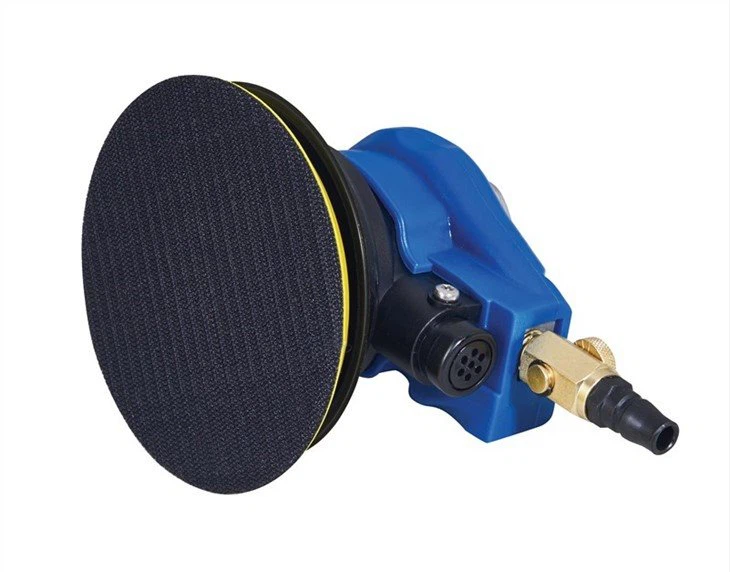
Measuring and Testing Vibration Levels
To ensure that our air sanders meet the highest standards of vibration performance, we conduct rigorous testing. We use specialized vibration measurement equipment to accurately measure the vibration levels of our products. These measurements are taken under various operating conditions to simulate real - world usage.
We also comply with international standards and regulations regarding vibration levels. For example, the European Union has established strict limits on the vibration levels of hand - held power tools to protect the health of workers. Our air sanders are designed to meet or exceed these standards, giving our customers peace of mind knowing that they are using safe and high - quality products.
Conclusion
In conclusion, the vibration level of an air sander is a critical factor that affects user comfort, the quality of work, and tool durability. As an air sander supplier, we are dedicated to providing our customers with air sanders that have low vibration levels. Our commitment to research, development, and testing ensures that our products meet the highest standards of performance and safety.
If you are in the market for high - quality, low - vibration air sanders, we invite you to explore our product range. Our team of experts is ready to assist you in finding the right air sander for your specific needs. Contact us today to start a discussion about your air sander requirements and let us help you achieve the best results in your sanding projects.
References
- International Organization for Standardization (ISO). ISO 5349 - 1:2001. Mechanical vibration — Measurement and evaluation of human exposure to hand - transmitted vibration — Part 1: General requirements.
- European Union. Directive 2002/44/EC on the minimum health and safety requirements regarding the exposure of workers to the risks arising from physical agents (vibration).
- Occupational Safety and Health Administration (OSHA). Hand - Arm Vibration Syndrome (HAVS).


