Hey there! As an air dust gun supplier, I often get asked about what kind of air compressor is suitable for an air dust gun. It's a great question, and in this blog, I'll share some insights to help you make the right choice.
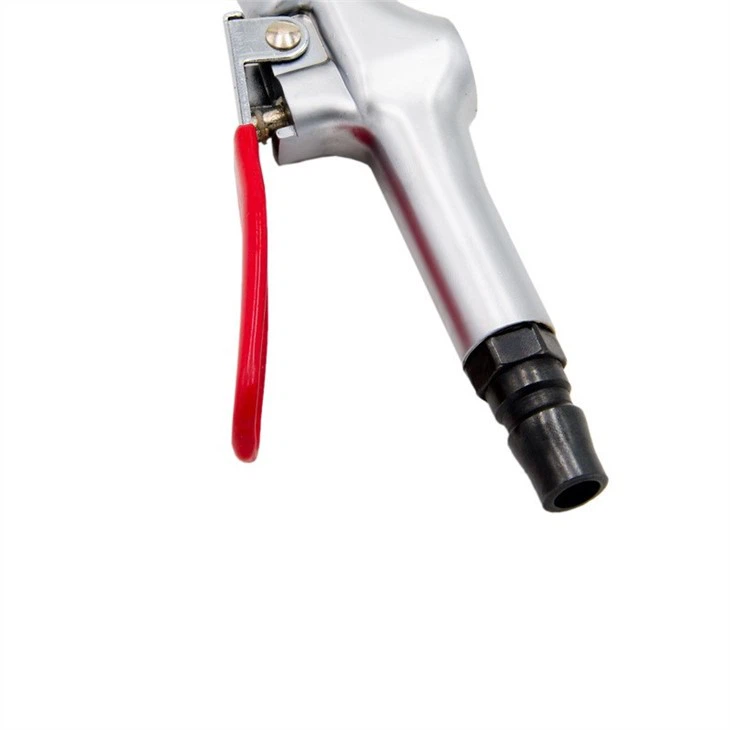
First things first, let's talk about the basics of air dust guns. Air dust guns, also known as Air Blow Gun, are handy tools used for cleaning, blowing debris, and drying various surfaces. They rely on compressed air to generate a powerful stream of air that can effectively remove dust, dirt, and other particles.
Now, when it comes to choosing an air compressor for your air dust gun, there are a few key factors to consider.

1. Air Pressure and Volume
One of the most important factors is the air pressure and volume that the compressor can deliver. Air dust guns typically require a certain amount of air pressure (measured in pounds per square inch or PSI) and air volume (measured in cubic feet per minute or CFM) to operate effectively.
Most air dust guns work well with an air pressure between 80 and 120 PSI. However, some heavy - duty air dust guns may require higher pressures. As for air volume, a general rule of thumb is that you'll need around 2 - 5 CFM for a standard air dust gun. If you're using a larger or more powerful air dust gun, you may need a compressor that can deliver 5 CFM or more.
For example, if you have a small - sized air dust gun that you use for light cleaning tasks around the house or in a workshop, a compressor with a lower CFM rating, say around 2 - 3 CFM, at the appropriate PSI will be sufficient. But if you're using it in a professional setting for heavy - duty cleaning, like in a manufacturing plant or an automotive workshop, you'll want a compressor with a higher CFM output.
2. Tank Size
The size of the compressor's tank also plays an important role. A larger tank means that the compressor can store more compressed air. This is beneficial because it allows you to use the air dust gun continuously for a longer period without the compressor having to cycle on and off frequently.
Let's say you have a small - tank compressor. When you use the air dust gun, the air in the tank gets depleted quickly, and the compressor has to start up again to replenish the air. This can be annoying, especially if you're doing a continuous cleaning job. On the other hand, a compressor with a larger tank can provide a more consistent supply of air, reducing the frequency of the compressor cycling on and off.
For light - duty applications, a compressor with a tank size of around 5 - 10 gallons may be enough. But for heavy - duty, continuous use, you'll want a tank size of 20 gallons or more.
3. Portability
Depending on your usage scenario, portability may be an important factor. If you need to move the compressor around a lot, for example, if you're a contractor who works at different job sites, a portable air compressor is a great choice.
Portable compressors are usually smaller in size and lighter in weight. They may have wheels and handles to make them easier to move. However, keep in mind that portable compressors may have smaller tanks and lower CFM ratings compared to larger, stationary compressors.
If you're using the air dust gun in a fixed location, like a home workshop or a factory, portability may not be as big of a concern, and you can opt for a larger, more powerful stationary compressor.
4. Power Source
Air compressors can be powered by different sources, including electricity, gasoline, and diesel. Electric compressors are a popular choice for indoor use because they're quiet, clean, and easy to operate. They're also more energy - efficient compared to gas - powered compressors.
Gas - powered compressors, on the other hand, are more suitable for outdoor use, especially in areas where there's no access to electricity. They're also more powerful and can provide a higher CFM output. Diesel - powered compressors are similar to gas - powered ones but are often more fuel - efficient and better suited for heavy - duty, continuous use.
If you're using the air dust gun in a home workshop or an indoor industrial setting, an electric compressor is probably the way to go. But if you're working outdoors on a construction site or in a remote area, a gas - or diesel - powered compressor will be more practical.
5. Noise Level
Noise can be a significant issue, especially if you're using the air compressor in a residential area or a quiet workspace. Electric compressors tend to be quieter than gas - powered ones.
If noise is a concern for you, look for compressors that are specifically designed to be quiet. Some manufacturers offer compressors with noise - reducing features, such as sound - insulated enclosures or low - noise motors.
Types of Air Compressors for Air Dust Guns
Reciprocating Compressors
Reciprocating compressors are one of the most common types of air compressors. They work by using a piston to compress the air in a cylinder. These compressors are relatively affordable and come in a wide range of sizes and capacities.
They're suitable for both light - duty and heavy - duty applications. For small - scale air dust gun use, a single - stage reciprocating compressor may be sufficient. For larger - scale, continuous use, a two - stage reciprocating compressor is a better choice as it can provide higher pressures and volumes.
Rotary Screw Compressors
Rotary screw compressors are more expensive than reciprocating compressors but are also more efficient and reliable. They work by using two rotating screws to compress the air. These compressors are capable of providing a continuous supply of compressed air, making them ideal for heavy - duty, industrial applications.
If you're using the air dust gun in a large manufacturing plant or a high - volume workshop, a rotary screw compressor may be the best option.
Scroll Compressors
Scroll compressors are known for their quiet operation and high efficiency. They work by using two spiral scrolls to compress the air. These compressors are usually smaller in size and are suitable for light - to medium - duty applications.
If you need a quiet and efficient compressor for use in a home workshop or a small office, a scroll compressor could be a great choice.
In conclusion, choosing the right air compressor for your air dust gun depends on several factors, including the air pressure and volume requirements, tank size, portability, power source, and noise level. By considering these factors, you can select a compressor that will work well with your air dust gun and meet your specific needs.
If you're still unsure about which air compressor is right for your air dust gun, or if you're interested in purchasing our high - quality air dust guns, feel free to reach out to us. We're here to help you make the best decision and ensure that you get the most out of your air dust gun and compressor combination.
References
- Compressed Air Systems Handbook
- Air Compressor Manufacturer's Guides