

As an air hose supplier, I often encounter customers who are confused about converting air hose thread types. This process can seem daunting at first, but with the right knowledge and tools, it can be quite straightforward. In this blog post, I'll share some insights on how to convert air hose thread types effectively.

Understanding Different Thread Types
Before diving into the conversion process, it's crucial to understand the various air hose thread types available in the market. The most common thread types include NPT (National Pipe Tapered), BSP (British Standard Pipe), and Metric threads.

NPT threads are widely used in North America. They have a tapered design, which means the diameter of the thread decreases as you move along the length of the pipe. This taper helps create a tight seal when the threads are tightened together. NPT threads come in different sizes, such as 1/8", 1/4", 3/8", 1/2", etc.
BSP threads, on the other hand, are commonly used in Europe and other parts of the world. There are two main types of BSP threads: BSPP (British Standard Pipe Parallel) and BSPT (British Standard Pipe Tapered). BSPP threads have a parallel design, while BSPT threads are tapered. Similar to NPT, BSP threads also come in various sizes.
Metric threads are used in many countries, especially in industries that follow the metric system. They are characterized by their pitch and diameter, which are measured in millimeters.
Reasons for Converting Thread Types
There are several reasons why you might need to convert air hose thread types. One common reason is compatibility. If you have an air tool or equipment with a specific thread type, but your air hose has a different thread type, you'll need to convert the threads to ensure a proper connection.
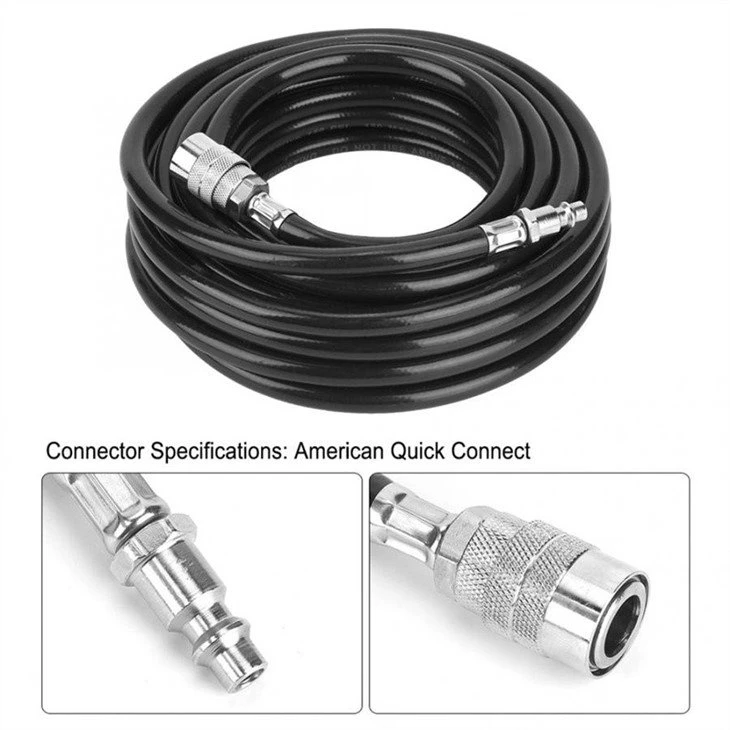
Another reason could be to adapt to different regional standards. For example, if you're exporting your air hoses to a country that uses a different thread type than your domestic market, you'll need to make the necessary conversions.
Tools Required for Thread Conversion
To convert air hose thread types, you'll need a few essential tools. These include:
- Thread adapters: These are the most important tools for thread conversion. They come in various sizes and configurations to match different thread types. For example, you can find NPT to BSP adapters, BSP to Metric adapters, etc.
- Wrenches: You'll need a set of wrenches to tighten the adapters properly. Make sure to choose the right size wrenches for the thread size you're working with.
- Teflon tape: Teflon tape is used to create a tight seal between the threads. It helps prevent air leaks and ensures a reliable connection.
Step-by-Step Guide to Converting Thread Types
Now that you have a basic understanding of thread types and the tools required, let's go through the step-by-step process of converting air hose thread types.

- Identify the thread types: The first step is to determine the thread types of your air hose and the equipment you want to connect it to. You can use a thread gauge or a caliper to measure the thread diameter and pitch. Compare the measurements with the standard thread sizes to identify the thread type.
- Select the appropriate adapter: Once you've identified the thread types, choose the right adapter for the conversion. Make sure the adapter has the correct thread sizes on both ends to match your air hose and the equipment.
- Prepare the threads: Before installing the adapter, clean the threads of the air hose and the equipment to remove any dirt, debris, or old sealant. Apply a thin layer of Teflon tape to the male threads in a clockwise direction. This will help create a tight seal and prevent air leaks.
- Install the adapter: Carefully screw the adapter onto the male threads of the air hose or the equipment. Use a wrench to tighten the adapter securely, but be careful not to over-tighten it, as this can damage the threads.
- Connect the air hose: Once the adapter is installed, connect the air hose to the other end of the adapter. Again, use a wrench to tighten the connection properly.
- Test the connection: After connecting the air hose, turn on the air supply and check for any air leaks. You can use a soapy water solution to detect leaks. If you see bubbles forming around the connection, it means there is a leak. Tighten the connection further or apply more Teflon tape if necessary.
Tips for a Successful Thread Conversion
- Choose high-quality adapters: Using low-quality adapters can lead to air leaks and other problems. Make sure to choose adapters from a reputable manufacturer that meets the required standards.
- Follow the manufacturer's instructions: Different adapters may have specific installation instructions. Make sure to read and follow these instructions carefully to ensure a proper installation.
- Inspect the threads regularly: Over time, the threads can wear out or become damaged. Regularly inspect the threads of your air hoses and equipment to detect any signs of wear or damage. Replace any worn or damaged parts as soon as possible.
- Use the right tools: Using the right tools is essential for a successful thread conversion. Make sure to use the correct size wrenches and other tools to avoid damaging the threads.
Our Air Hose Products
At our company, we offer a wide range of high-quality air hoses to meet your needs. Our Recoil Air Hose is a popular choice among customers. It is made from durable materials and has a recoil design that makes it easy to store and use. Our Durable Air Rubber Hose is another excellent option. It is resistant to abrasion, oil, and chemicals, making it suitable for a variety of applications.
If you're interested in purchasing our air hoses or have any questions about thread conversion, please don't hesitate to contact us. We have a team of experts who can provide you with the guidance and support you need.
Conclusion
Converting air hose thread types is a relatively simple process if you have the right knowledge and tools. By understanding the different thread types, selecting the appropriate adapter, and following the step-by-step guide, you can ensure a proper connection between your air hose and the equipment. At our company, we're committed to providing high-quality air hoses and excellent customer service. If you have any further questions or need assistance with thread conversion, please feel free to reach out to us. We look forward to helping you with your air hose needs.
References
- "Air Hose Thread Types and Conversions" - Industry Standard Handbook
- "Thread Identification and Measurement" - Engineering Textbook


