

Hey there! As an air sander supplier, I often get asked a bunch of questions about what our tools can and can't do. One question that pops up quite a bit is, "Can an air sander be used for rubber sanding?" Well, let's dive right into it and find out.
First off, let's talk a bit about air sanders. We've got different types in our inventory. There's the Air Random Orbital Sander, which is super versatile. It moves in a random circular pattern, which helps to prevent swirl marks on the surface you're sanding. Then there's the Air Palm Random Orbital Sander, which is smaller and more handheld, great for those hard - to - reach places.
Now, onto rubber sanding. Rubber is a unique material. It's soft, flexible, and has a tendency to heat up and melt when exposed to too much friction. This is a crucial factor to consider when thinking about using an air sander on it.
The good news is, yes, an air sander can be used for rubber sanding, but there are some things you need to keep in mind.
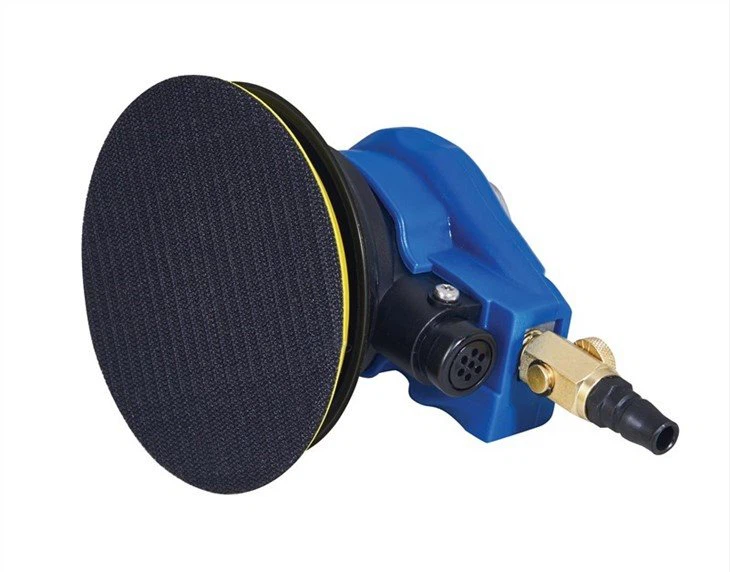

Advantages of Using an Air Sander for Rubber Sanding
One of the main advantages is the speed. Air sanders are powered by compressed air, which means they can spin at high speeds. This allows you to sand large areas of rubber relatively quickly. For example, if you're working on a rubber gasket or a large rubber mat, an air sander can get the job done in no time compared to sanding by hand.
Another advantage is the consistency. With an air sander, you can achieve a more even sanding result. The random orbital motion of our Air Random Orbital Sander ensures that the sanding is uniform across the rubber surface. This is important if you need a smooth finish, like when you're preparing a rubber part for painting or bonding.
Challenges and How to Overcome Them
As I mentioned earlier, rubber can heat up and melt due to friction. When using an air sander, the high - speed rotation can generate a lot of heat. To prevent this, you need to use a low - grit sandpaper initially. A low - grit sandpaper, like 60 or 80 grit, removes material more aggressively but with less friction compared to a high - grit one. Once you've removed the bulk of the material, you can switch to a higher - grit sandpaper, say 120 or 180 grit, for a smoother finish.
You also need to take breaks while sanding. Don't keep the air sander running continuously on the rubber surface. Let the rubber cool down every few minutes to avoid overheating. You can also use a lubricant. A light coat of water - based lubricant on the rubber surface can reduce friction and heat generation.
The type of air sander you choose also matters. The Air Palm Random Orbital Sander is a great choice for smaller rubber parts. Its smaller size gives you more control, and you can easily maneuver it around curves and edges. For larger rubber surfaces, the Air Random Orbital Sander is more suitable as it covers more area with each pass.
Applications of Rubber Sanding with an Air Sander
There are several industries where rubber sanding with an air sander is useful. In the automotive industry, rubber gaskets often need to be sanded to ensure a proper fit. An air sander can quickly and accurately sand the edges of these gaskets, improving their sealing performance.
In the manufacturing of rubber products, like rubber wheels or conveyor belts, sanding is sometimes required to adjust the size or smooth the surface. Our air sanders can handle these tasks efficiently, helping manufacturers meet their production deadlines.
In the arts and crafts world, rubber can be used to make stamps or sculptures. Sanding the rubber with an air sander can help refine the shape and give it a professional finish.
Tips for Using an Air Sander on Rubber
- Choose the Right Sandpaper: As I said before, start with a low - grit sandpaper and gradually move to a higher - grit one. Make sure the sandpaper is suitable for rubber. Some sandpapers are designed specifically for soft materials like rubber and work better than general - purpose ones.
- Control the Pressure: Don't press too hard on the rubber surface. Applying excessive pressure can increase friction and heat, leading to melting. Let the air sander do the work, and just guide it gently over the rubber.
- Wear Protective Gear: When sanding rubber, dust is generated. Wear a dust mask and safety goggles to protect yourself from inhaling the dust and getting it in your eyes.
Conclusion
So, to sum it up, an air sander can definitely be used for rubber sanding. It offers speed, consistency, and the ability to handle different rubber - sanding tasks in various industries. However, you need to take precautions to avoid overheating and melting the rubber. By following the tips I've shared, you can achieve great results.
If you're in the market for a high - quality air sander for your rubber - sanding needs, we've got you covered. Our Air Random Orbital Sander and Air Palm Random Orbital Sander are top - notch products that are built to last. We're always here to answer your questions and help you choose the right tool for your job. If you're interested in purchasing our air sanders or want to learn more about them, feel free to reach out to us for a procurement discussion.
References
- "Handbook of Abrasive Technology", John Wiley & Sons
- "The Complete Guide to Power Tools", DIY Publishing


