

As a leading supplier of air sanders, I've witnessed firsthand the transformative impact these tools have on various industries. Air sanders are indispensable in woodworking, automotive repair, metal fabrication, and more, offering precision, efficiency, and reliability. But have you ever wondered what powers these remarkable machines? In this blog post, we'll delve into the power source of air sanders, exploring the technology behind their operation and the benefits it offers.
Compressed Air: The Lifeblood of Air Sanders
At the heart of every air sander lies compressed air. Unlike electric sanders that rely on electricity to power their motors, air sanders use compressed air to drive their internal mechanisms. This compressed air is typically supplied by an air compressor, which draws in ambient air, compresses it to a high pressure, and stores it in a tank for later use.
When the air sander is activated, the compressed air is released from the tank and directed through a hose to the sander. Inside the sander, the compressed air enters a motor or piston mechanism, where it creates a force that drives the sanding pad or disc in a circular or orbital motion. This motion allows the sander to remove material quickly and efficiently, leaving a smooth and even finish.
How Compressed Air Powers an Air Sander
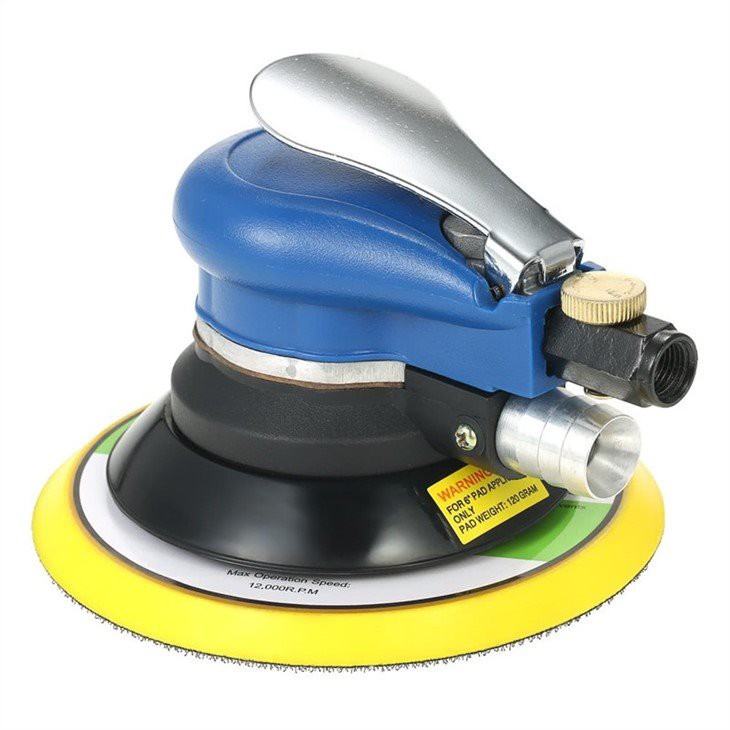
To understand how compressed air powers an air sander, let's take a closer look at the internal components of a typical air sander. Most air sanders consist of the following main parts:
- Air Inlet: This is where the compressed air enters the sander from the air compressor.
- Regulator: The regulator controls the pressure of the compressed air entering the sander, allowing the user to adjust the speed and power of the tool.
- Motor or Piston Mechanism: The motor or piston mechanism converts the energy of the compressed air into mechanical motion, driving the sanding pad or disc.
- Sanding Pad or Disc: The sanding pad or disc is the part of the sander that comes into contact with the workpiece, removing material through friction.
- Exhaust Port: The exhaust port releases the used air from the sander, allowing it to return to the atmosphere.
When the air sander is turned on, the compressed air enters the sander through the air inlet and passes through the regulator. The regulator adjusts the pressure of the air to the desired level, depending on the type of sanding operation and the material being sanded. The compressed air then enters the motor or piston mechanism, where it creates a force that drives the sanding pad or disc in a circular or orbital motion.
As the sanding pad or disc rotates, it comes into contact with the workpiece, removing material through friction. The used air is then released from the sander through the exhaust port, allowing it to return to the atmosphere. This continuous cycle of compressed air entering the sander, powering the motor or piston mechanism, and exiting through the exhaust port keeps the sander running smoothly and efficiently.
Benefits of Using Compressed Air as a Power Source
There are several benefits to using compressed air as a power source for air sanders:
- Power and Performance: Compressed air provides a high level of power and performance, allowing air sanders to remove material quickly and efficiently. This makes them ideal for heavy-duty sanding applications, such as sanding large surfaces or removing thick layers of paint or rust.
- Durability and Reliability: Air sanders are known for their durability and reliability, thanks in part to the use of compressed air as a power source. Unlike electric sanders, which can be prone to overheating and motor failure, air sanders are less likely to experience mechanical problems, making them a long-lasting investment.
- Safety: Compressed air is a clean and safe power source, making air sanders a popular choice in industries where safety is a top priority. Unlike electric sanders, which can pose a risk of electrical shock or fire, air sanders do not require an electrical connection, reducing the risk of accidents.
- Versatility: Air sanders are highly versatile tools that can be used for a wide range of sanding applications, including sanding wood, metal, plastic, and more. They can also be used with a variety of sanding pads and discs, allowing users to achieve different levels of sanding finesse.
Types of Air Sanders
There are several types of air sanders available on the market, each designed for specific sanding applications. Some of the most common types of air sanders include:
- Air Palm Random Orbital Sander: This type of air sander is ideal for small-scale sanding applications, such as sanding furniture, cabinets, and other woodworking projects. It features a compact design and a random orbital motion, which helps to prevent swirl marks and leave a smooth finish.
- Air Random Orbital Sander: Similar to the air palm random orbital sander, the air random orbital sander is designed for larger sanding applications, such as sanding car bodies, boats, and other large surfaces. It features a larger sanding pad and a more powerful motor, allowing it to remove material quickly and efficiently.
- Air Belt Sander: This type of air sander is ideal for sanding large, flat surfaces, such as floors, tabletops, and countertops. It features a continuous sanding belt that rotates around two drums, providing a consistent and even sanding action.
- Air Disc Sander: This type of air sander is designed for sanding curved or irregular surfaces, such as furniture legs, chair backs, and other decorative woodworking projects. It features a circular sanding disc that rotates at high speed, allowing it to remove material quickly and efficiently.
Conclusion
In conclusion, compressed air is the power source that drives air sanders, providing them with the power, performance, durability, and safety they need to excel in a wide range of sanding applications. As a leading supplier of air sanders, we understand the importance of choosing the right power source for your sanding needs. That's why we offer a wide range of high-quality air sanders that are powered by compressed air, ensuring that you have the tools you need to get the job done right.

If you're in the market for an air sander, we invite you to explore our extensive product catalog and discover the perfect tool for your needs. Our team of experts is always available to answer your questions and provide you with the guidance and support you need to make an informed decision. Contact us today to learn more about our air sanders and how they can help you achieve your sanding goals.
References
- "Air Sanders: How They Work and Why They're a Must-Have Tool." Woodworking Network, 2023.
- "The Benefits of Using Compressed Air Tools." Compressed Air Best Practices, 2023.
- "Types of Air Sanders and Their Applications." Tool Reviewer, 2023.


