

Hey there, fellow painters! As an air hose supplier, I've seen a whole bunch of different air hoses out there, and I know how crucial it is to pick the right one for your painting projects. In this blog, I'm gonna break down what makes the best air hose for painting and give you some tips to help you make the right choice.
First off, let's talk about the importance of a good air hose. When you're painting, you need a steady and consistent flow of air to get that smooth, professional finish. A lousy air hose can cause all sorts of problems, like uneven pressure, air leaks, and even paint spattering. So, investing in a high - quality air hose is definitely worth it.
One of the first things to consider is the material of the air hose. There are a few common materials used for air hoses, each with its own pros and cons.
Rubber hoses are a classic choice. They're flexible, which means they can bend and twist without kinking easily. This flexibility is great when you're moving around while painting, especially in tight spaces. Rubber hoses are also durable and can withstand a fair amount of wear and tear. You can check out our Durable Air Rubber Hose for a reliable option. It's built to last and can handle the rigors of regular painting jobs.
Another popular option is PVC hoses. These are lightweight and relatively inexpensive. They're easy to carry around, which is a plus if you're doing a lot of on - the - go painting. However, PVC hoses are not as flexible as rubber hoses and can be more prone to kinking. They also might not be as durable in extreme temperatures.
Then there are recoil air hoses. These are super convenient because they retract on their own when you're done using them. They save a lot of storage space and keep your workspace organized. Our Recoil Air Hose is a top - notch choice. It offers a great combination of flexibility and ease of use. You don't have to worry about winding up a long hose after you're finished painting.
Now, let's talk about size. The size of the air hose matters a lot. The diameter of the hose affects the air flow. A wider diameter hose can carry more air, which means you'll get a more consistent pressure. For most painting jobs, a 3/8 - inch or 1/2 - inch diameter hose is a good choice. A 3/8 - inch hose is usually sufficient for smaller paint guns and light - duty painting. If you're using a larger paint gun or doing heavy - duty work, a 1/2 - inch hose will give you better results.
Length is another important factor. You want a hose that's long enough to reach all the areas you need to paint without being too long. If the hose is too long, there can be a drop in air pressure, which can affect the quality of your paint job. On the other hand, if it's too short, you'll be restricted in your movement. A good rule of thumb is to choose a hose that's about 25 to 50 feet long, depending on the size of your painting area.
Pressure rating is also crucial. The air hose needs to be able to handle the pressure output of your air compressor. Most air compressors used for painting have a pressure range of 40 to 120 PSI. Make sure the air hose you choose has a pressure rating that exceeds the maximum pressure of your compressor. This will ensure that the hose doesn't burst or develop leaks under pressure.
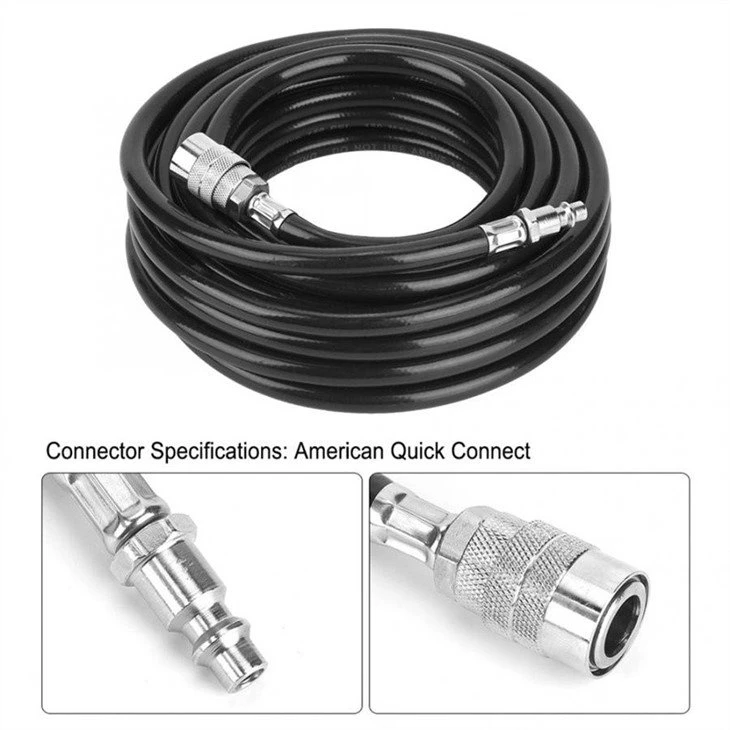
When it comes to connectors, you want to make sure they're of high quality. A loose or faulty connector can cause air leaks, which will mess up your paint job. Look for hoses with brass or stainless - steel connectors. These materials are corrosion - resistant and provide a tight seal.
Now, let's touch on some additional features that can make an air hose even better for painting. Some hoses come with anti - static properties. This is really useful because it helps prevent static electricity from building up, which can attract dust and dirt to your wet paint.
There are also hoses with a smooth inner lining. A smooth inner lining reduces friction, which means better air flow and more consistent pressure. This can result in a more even paint application.
If you're working in a cold environment, you might want to consider an air hose that's designed to be flexible in low temperatures. Some hoses can become stiff and brittle in the cold, making them difficult to use.
So, to sum it up, the best air hose for painting depends on your specific needs. If you need flexibility and durability, a rubber hose might be the way to go. For easy storage and convenience, a recoil air hose is a great option. And make sure to pay attention to the size, pressure rating, and connectors.
If you're in the market for a new air hose for your painting projects, I'd love to help you find the perfect one. As an air hose supplier, I've got a wide range of options to suit different budgets and requirements. Whether you're a professional painter or a DIY enthusiast, we've got you covered. Don't hesitate to reach out to us for more information or to discuss your specific needs. We can provide you with detailed product specifications and help you make an informed decision. Let's work together to make your painting projects a success!

References:
- Industry knowledge and experience as an air hose supplier.
- General knowledge of air tools and painting equipment.


