

As a trusted supplier of air cleaning guns, I understand the importance of selecting the appropriate air pressure for different cleaning tasks. Air cleaning guns are versatile tools widely used in various industries, from automotive detailing to industrial machinery cleaning. In this blog post, I'll share valuable insights on how to choose the right air pressure for different cleaning scenarios, ensuring optimal cleaning results while maximizing the lifespan of your air cleaning gun.
Understanding Air Pressure Basics
Before delving into specific cleaning tasks, it's essential to understand the basics of air pressure and its significance in air cleaning guns. Air pressure is measured in pounds per square inch (PSI) and plays a crucial role in determining the force and velocity at which air is expelled from the gun. Higher air pressure generally results in more powerful airflow, which can be effective for heavy-duty cleaning tasks. However, excessive pressure can also cause damage to sensitive surfaces or dislodge contaminants forcefully, leading to a mess or potential injury.
On the other hand, lower air pressure is suitable for more delicate cleaning operations, where a gentle stream of air is required to remove dust, debris, or moisture without causing damage. Finding the right balance between air pressure and cleaning efficiency is key to achieving the best results with your air cleaning gun.
Cleaning Tasks and Appropriate Air Pressures
Light Dusting and Surface Cleaning
For light dusting and surface cleaning tasks, such as removing dust from electronics, office equipment, or delicate surfaces, a low air pressure setting is recommended. Using an air pressure of around 10 - 20 PSI ensures a gentle stream of air that effectively removes dust particles without causing any damage. This low-pressure setting is also ideal for cleaning intricate parts and hard-to-reach areas where a more powerful airflow could dislodge or damage components.
Automotive Interior Cleaning
Automotive interior cleaning requires a more targeted approach to ensure a thorough clean without causing damage to the vehicle's interior surfaces. When using an air cleaning gun for automotive interior cleaning, a medium air pressure setting of 20 - 30 PSI is typically sufficient. This pressure range allows for effective removal of dirt, debris, and dust from carpets, seats, dashboard, and other interior components.

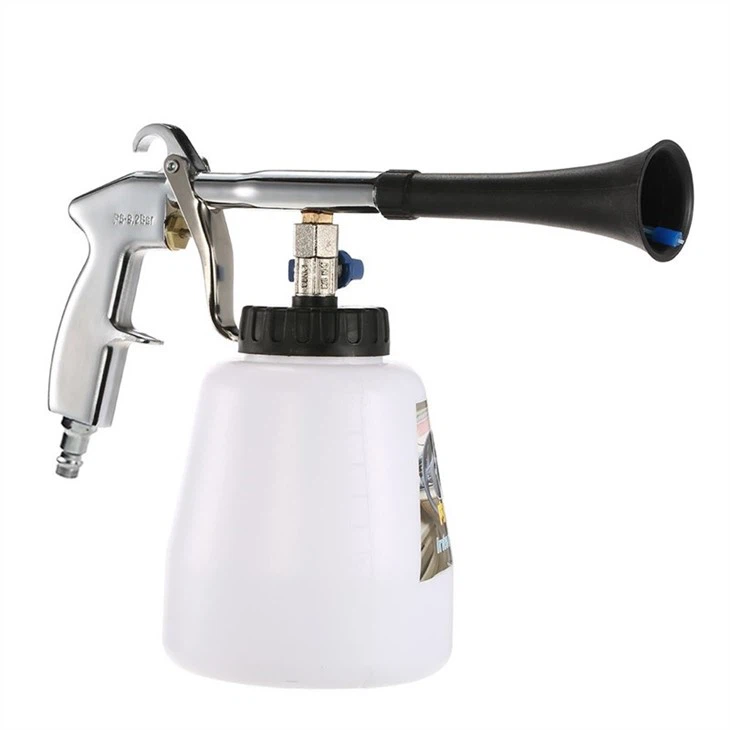
For more stubborn stains and dirt buildup, you can consider using a Tornador Foam Gun in conjunction with a Tornador Car Interior Cleaner. These specialized tools can help to break down and remove tough stains and dirt, providing a more thorough clean. Adjust the air pressure as needed to control the application of the foam and ensure even coverage.
Industrial Machinery Cleaning
Industrial machinery cleaning often involves removing heavy grease, oil, and dirt buildup from equipment surfaces. For these heavy-duty cleaning tasks, a higher air pressure setting of 30 - 50 PSI may be required. The increased air pressure generates a more powerful airflow that can effectively dislodge and remove stubborn contaminants.
However, it's important to exercise caution when using high air pressure on industrial machinery, as excessive pressure can damage delicate components or cause debris to be propelled at high speeds, posing a safety risk. Always start with a lower air pressure setting and gradually increase the pressure as needed, while closely monitoring the cleaning process to ensure that no damage occurs.
Metalwork and Welding Cleaning
In metalwork and welding applications, air cleaning guns are commonly used to remove slag, oxidation, and other residues from metal surfaces. For these tasks, a medium to high air pressure setting of 20 - 40 PSI is typically recommended. The air pressure helps to blow away loose particles and contaminants, preparing the metal surface for further processing or finishing.
When cleaning metal surfaces, it's important to ensure that the air pressure is uniform across the surface to achieve consistent cleaning results. Use the air cleaning gun in a sweeping motion, moving the gun in a back-and-forth or circular pattern to cover the entire surface evenly.
Factors Affecting Air Pressure Selection
In addition to the specific cleaning task, several other factors can influence the appropriate air pressure for your air cleaning gun. These factors include:
- Nozzle Size and Type: Different nozzles are designed to produce different airflow patterns and pressures. Generally, smaller nozzles produce a more concentrated stream of air with higher pressure, while larger nozzles provide a wider, more dispersed airflow with lower pressure. Choose the nozzle size and type that is appropriate for your cleaning task and desired airflow characteristics.
- Air Compressor Capacity: The capacity of your air compressor determines the maximum air pressure and volume that can be delivered to the air cleaning gun. Make sure that your air compressor is capable of providing the required air pressure and volume for your cleaning tasks. If you're using a high-pressure air cleaning gun, consider using a larger air compressor or adjusting the compressor settings to meet the requirements.
- Distance from the Surface: The distance between the air cleaning gun nozzle and the surface being cleaned can also affect the air pressure and cleaning efficiency. As a general rule, the closer the nozzle is to the surface, the higher the air pressure and cleaning force. However, be careful not to get too close to the surface, as this can cause damage or scratch the surface. Adjust the distance as needed to achieve the desired cleaning results.
Tips for Selecting the Right Air Pressure
- Start Low and Gradually Increase: When starting a new cleaning task, it's always a good idea to start with a low air pressure setting and gradually increase the pressure as needed. This allows you to assess the cleaning effectiveness and ensure that a higher air pressure will not cause damage to the surface being cleaned.
- Test on a Small Area: Before proceeding with a full cleaning operation, test the air pressure on a small, inconspicuous area to ensure that it does not cause any damage or discoloration. This will give you an idea of the appropriate air pressure for the specific surface and cleaning task.
- Follow Manufacturer's Recommendations: Always refer to the manufacturer's instructions and recommendations for your air cleaning gun and air compressor. These guidelines provide valuable information on the recommended air pressure ranges for different cleaning tasks and help to ensure the safe and effective use of your equipment.
Safety Precautions
When using an air cleaning gun, it's important to take the necessary safety precautions to protect yourself and others. Here are some safety tips to keep in mind:
- Wear Protective Gear: Always wear appropriate protective gear, such as safety glasses, gloves, and a dust mask, to protect yourself from flying debris, dust, and other contaminants.
- Keep a Safe Distance: Maintain a safe distance from the surface being cleaned to avoid injury from flying debris or high-pressure airflow.
- Avoid Pointing at People or Animals: Never point the air cleaning gun at people, animals, or yourself. The high-pressure airflow can cause serious injury.
- Turn Off the Air Supply: When not in use, turn off the air supply to the air cleaning gun to prevent accidental activation.
Conclusion
Selecting the appropriate air pressure for different cleaning tasks is essential for achieving optimal cleaning results while ensuring the safety and longevity of your air cleaning gun. By understanding the basics of air pressure, considering the specific cleaning task, and taking into account the factors that affect air pressure selection, you can choose the right air pressure setting for your needs.
If you're in the market for a high-quality air cleaning gun or have any questions about air pressure selection, don't hesitate to contact us. As a leading air cleaning gun supplier, we offer a wide range of products to meet your specific cleaning requirements. Our team of experts is always available to provide personalized advice and support to help you make the best choice for your business. Start optimizing your cleaning processes today by selecting the right air pressure for your air cleaning gun.
References
- ASME International. (2021). Pressure Technology Division. Retrieved from https://www.asme.org/topics-resources/content/pressure-technology-division
- Compressed Air and Gas Institute. (2021). Air Compressor Handbook. Retrieved from https://www.cagi.org/


