

Hey there! As a supplier of Air Dust Guns, I often get asked about how to adjust the airflow of these nifty tools. It's a crucial skill that can make your work with an Air Dust Gun a whole lot more efficient and effective. So, let's dive right into it!
First off, let's understand why adjusting the airflow matters. Different tasks require different levels of airflow. For instance, if you're just blowing away some light dust from a delicate surface, you don't want a super-strong blast that might damage the object. On the other hand, when you're trying to clear out stubborn debris from a large area, a higher airflow is what you need.

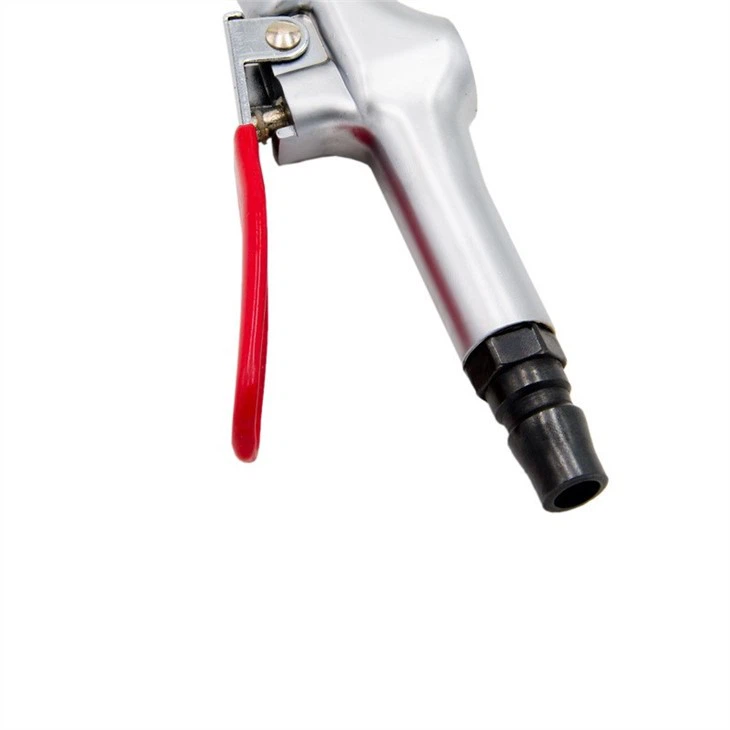
Most Air Dust Guns come with some sort of adjustment mechanism. The most common one is a valve. This valve can be used to control the amount of air that comes out of the gun. It's usually located near the handle or the connection point where the air hose attaches to the gun.
To start adjusting the airflow, you'll first need to connect your Air Dust Gun to an air source, like a compressor. Make sure the compressor is turned off before you make the connection. Once it's connected, turn on the compressor and let it build up some pressure. You can usually tell when it's ready by looking at the pressure gauge on the compressor.
Now, let's talk about how to actually adjust the valve. On many Air Dust Guns, the valve is a simple knob or a screw. If it's a knob, you can just turn it clockwise to decrease the airflow and counterclockwise to increase it. If it's a screw, you'll need to use a screwdriver to turn it. Turning the screw in one direction will tighten it, reducing the airflow, and turning it in the other direction will loosen it, allowing more air to flow through.
As you're adjusting the valve, it's a good idea to test the airflow. You can do this by aiming the gun at a piece of scrap material or an area that won't be affected by the air blast. Start with a low airflow setting and gradually increase it until you find the right level for your task. Pay attention to how the air is hitting the surface. If it's too weak, you might not be able to clear the dust or debris effectively. If it's too strong, you could cause damage or create a mess by blowing the dust everywhere.
Another thing to keep in mind is the type of nozzle your Air Dust Gun has. Different nozzles can affect the airflow pattern and intensity. Some nozzles are designed to produce a wide, gentle blast, which is great for covering a large area. Others are more focused, creating a concentrated stream of air that's better for getting into tight spaces. If you're not getting the results you want with the airflow adjustment, you might want to try swapping out the nozzle.
If you're using an Air Dust Gun in a professional setting, like a workshop or a factory, you might also want to consider using an air regulator. An air regulator is a device that can be installed between the compressor and the Air Dust Gun. It allows you to have more precise control over the air pressure and, therefore, the airflow. With an air regulator, you can set a specific pressure level and ensure that the airflow remains consistent throughout your work.
Now, let's talk about some common issues you might encounter when adjusting the airflow. One problem is a leaky valve. If you notice that the airflow seems inconsistent or that air is escaping from around the valve, it could be a sign of a leak. In this case, you'll need to check the valve for any damage or loose connections. You might be able to fix a small leak by tightening the valve or replacing a worn-out gasket.
Another issue could be a clogged nozzle. Over time, dust and debris can build up inside the nozzle, restricting the airflow. To fix this, you can try removing the nozzle and cleaning it with a small brush or a pipe cleaner. You can also soak the nozzle in a cleaning solution to dissolve any stubborn dirt.
It's also important to maintain your Air Dust Gun regularly. This includes cleaning it after each use, checking for any signs of wear and tear, and lubricating the moving parts if necessary. A well-maintained Air Dust Gun will not only perform better but also last longer.
If you're in the market for a new Air Dust Gun or need some replacement parts, check out our Air Blow Gun. We offer a wide range of high-quality Air Dust Guns that are designed to meet the needs of various industries. Our products are known for their durability, performance, and ease of use.
In conclusion, adjusting the airflow of an Air Dust Gun is a relatively simple process once you understand the basics. By following the steps outlined in this blog post, you'll be able to get the most out of your Air Dust Gun and complete your tasks more efficiently. If you have any questions or need further assistance, don't hesitate to reach out to us. We're here to help you make the most of your Air Dust Gun experience. Whether you're a DIY enthusiast or a professional, we've got the right solution for you. So, why wait? Contact us today to start a conversation about your Air Dust Gun needs and let's work together to find the perfect fit for your requirements.
References
- Air Compressor User Manuals
- Air Dust Gun Manufacturer Guides


