

LVLP (Low Volume Low Pressure) spray guns have gained significant popularity in various coating applications due to their efficiency, precision, and reduced overspray. As a leading supplier of LVLP spray guns, we often receive inquiries from customers about the suitability of using our products on stone surfaces. In this blog post, we will delve into the technical aspects, advantages, challenges, and best practices of using an LVLP spray gun for spraying on stone surfaces.
Technical Feasibility of Using an LVLP Spray Gun on Stone
The fundamental principle of an LVLP spray gun involves using a low volume of compressed air at low pressure to atomize the coating material and propel it onto the surface. This mechanism is well - suited for stone surfaces because it allows for a more controlled application. Stone is a porous material, and the low - pressure application of an LVLP spray gun helps to prevent the coating from being forced too deeply into the pores, which could lead to uneven drying or a less durable finish.
The atomization process in an LVLP spray gun creates a fine mist of the coating. When applied to stone, this fine mist can better conform to the irregularities and textures of the stone surface, providing a more uniform and smooth finish. Additionally, the low - volume air flow reduces the risk of blowing dust or debris around, which is crucial when working on stone as any contaminants on the surface can affect the adhesion of the coating.
Advantages of Using an LVLP Spray Gun on Stone
1. Reduced Overspray
One of the most significant advantages of an LVLP spray gun is the minimal overspray. When spraying on stone, especially in areas where there are adjacent surfaces that need to be protected, reduced overspray is essential. This not only saves coating material but also reduces the cleanup time. For example, in a patio with stone pavers where there are nearby plants or furniture, an LVLP spray gun will ensure that the coating is applied precisely to the stone surface without getting on unwanted areas.
2. Excellent Coverage and Finish
The fine atomization produced by an LVLP spray gun results in excellent coverage of the stone surface. It can penetrate into the small crevices and pores of the stone, providing a more complete coating. This leads to a more durable and aesthetically pleasing finish. Whether you are applying a clear sealant to enhance the natural beauty of the stone or a colored paint to change its appearance, an LVLP spray gun can deliver a high - quality finish.
3. Energy Efficiency
LVLP spray guns require less compressed air compared to traditional high - pressure spray guns. This translates to lower energy consumption, which is beneficial for both the environment and the user's operating costs. For large - scale stone coating projects, such as coating a stone facade of a building, the energy savings over time can be substantial.
Challenges of Using an LVLP Spray Gun on Stone
1. Surface Preparation
Stone surfaces need to be properly prepared before spraying. Any dirt, dust, oil, or loose particles on the surface can affect the adhesion of the coating. Cleaning the stone thoroughly, and in some cases, sanding or etching the surface to improve adhesion, is necessary. Failure to do so can result in the coating peeling or flaking off over time.
2. Coating Viscosity
The viscosity of the coating used on stone is crucial. LVLP spray guns work best with coatings that have a relatively low viscosity. If the coating is too thick, it may not atomize properly, leading to an uneven finish. Adjusting the viscosity of the coating by adding a suitable thinner or reducer is often required to ensure optimal performance of the LVLP spray gun.
3. Drying Time
Stone is a heat - absorbing material, and its temperature can affect the drying time of the coating. In hot weather, the coating may dry too quickly, causing issues such as orange peel texture or poor adhesion. In cold weather, the drying time may be significantly extended, increasing the risk of dust and debris settling on the wet coating. Controlling the environmental conditions and choosing a coating with appropriate drying characteristics is essential.
Best Practices for Using an LVLP Spray Gun on Stone
1. Surface Preparation
- Clean the stone surface thoroughly using a pressure washer or a suitable cleaning solution. Remove all dirt, dust, and oil.
- If necessary, sand or etch the surface to create a rough texture for better coating adhesion.
- Allow the stone to dry completely before starting the spraying process.
2. Coating Selection
- Choose a coating that is specifically designed for stone surfaces. Consider factors such as durability, weather resistance, and the desired finish.
- Test the coating on a small, inconspicuous area of the stone to ensure compatibility and the desired appearance.
3. Spray Gun Setup
- Adjust the air pressure and fluid flow of the LVLP spray gun according to the manufacturer's recommendations for the coating being used.
- Use a proper nozzle size for the type of coating and the desired spray pattern.
4. Spraying Technique
- Hold the spray gun perpendicular to the stone surface and maintain a consistent distance (usually around 6 - 8 inches) during the spraying process.
- Apply the coating in thin, even layers, allowing each layer to dry before applying the next one. This will help to achieve a smooth and durable finish.
Comparison with Other Spray Gun Types
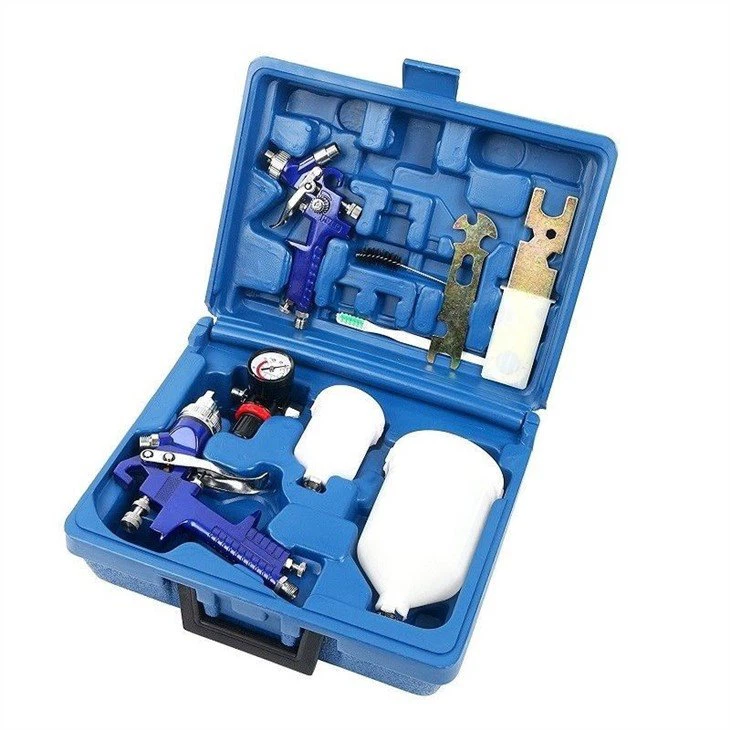
When considering spraying on stone surfaces, it's important to compare LVLP spray guns with other types, such as HVLP (High Volume Low Pressure) spray guns. HVLP spray guns, like the HVLP Spray Gun Kit, HVLP Paint Spray Gun and HVLP Air Spray Gun, are also popular for coating applications. While HVLP guns use a high volume of air at low pressure, LVLP guns use a lower volume of air.
HVLP guns are generally better at achieving a very fine finish and are often used in automotive and furniture applications. However, they may require a more powerful air compressor. LVLP guns, on the other hand, are more energy - efficient and can be used with a smaller air compressor. For stone surfaces, the lower air volume of an LVLP gun can be an advantage as it reduces the risk of blowing dust and debris onto the wet coating.
Conclusion
In conclusion, an LVLP spray gun can indeed be used for spraying on stone surfaces. It offers several advantages, including reduced overspray, excellent coverage, and energy efficiency. However, it also comes with some challenges, such as the need for proper surface preparation and coating viscosity adjustment. By following the best practices outlined in this blog post, users can achieve a high - quality finish on stone surfaces using an LVLP spray gun.
If you are interested in purchasing an LVLP spray gun for your stone coating projects, we invite you to contact us for a detailed discussion. Our team of experts can help you select the right product based on your specific requirements and provide you with the necessary technical support.

References
- [Author's Last Name, First Name. "Title of the Book." Publisher, Publication Year.]
- [Author's Last Name, First Name. "Title of the Article." Journal Name, Volume Number, Issue Number, Publication Year, Page Numbers.]


